
战狼2
注意:洗衣机上的干洗羽绒服可能会爆炸。_我的网站

一 | 1月13日,据《每日经济新闻》微博报道,最近有报道称用洗衣机烘干衣服会引起爆炸。物理专家说,当洗衣机旋转时,羽绒服中的气体不能释放,尼龙织物与洗衣机筒壁之间可能会产生静电。
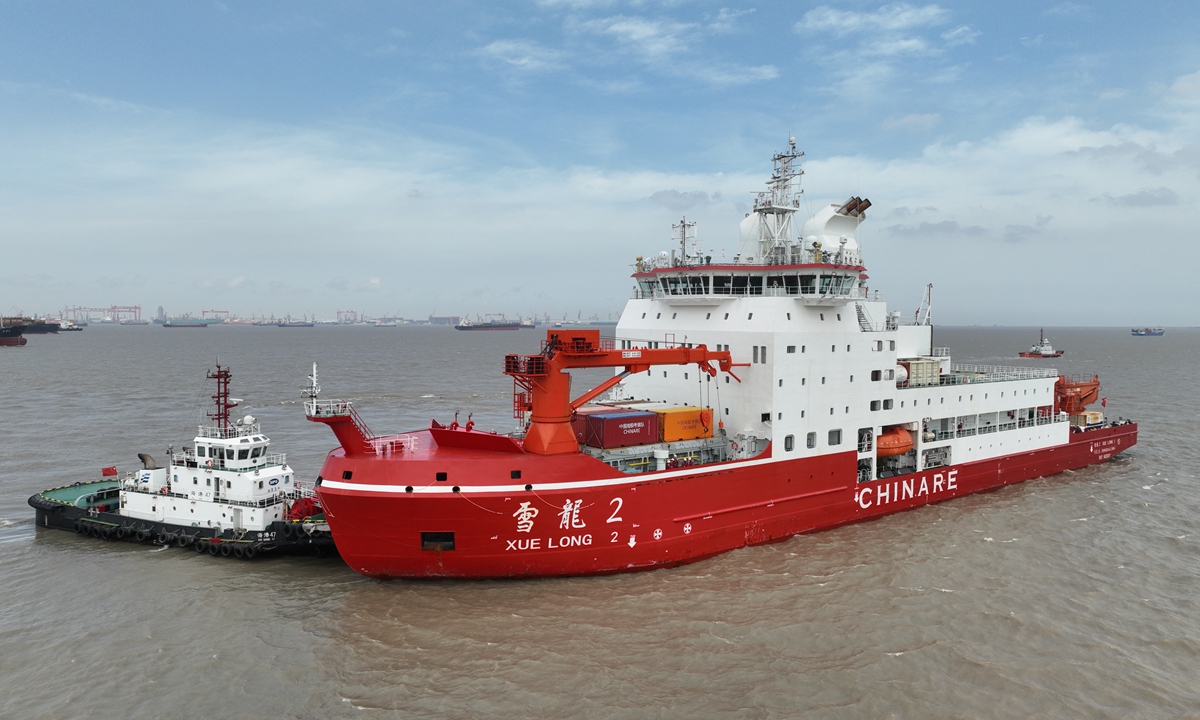
After completing the first stage of comprehensive ocean station surveys on Friday, Xuelong 2 sailed toward higher latitudes and selected a large, relatively flat piece of sea ice about 1.5 meters thick in a densely packed ice zone for its first ice station.
According to Lin Long, captain of the Xuelong 2 sea ice team, the ice station survey conducted by the vessel during this voyage will include six short-term ice stations and one long-term ice station, the Xinhua News Agency reported Sunday.
More than 20 types of scientific operations will be carried out, including the deployment of expendable ice-based buoys, snow and ice-core sampling, under-ice water sampling, sea-ice remote sensing, atmospheric profiling and under-ice oceanographic observations.
Lan Musheng, assistant to the chief scientist of the expedition, said the researchers will comprehensively monitor changes in parameters related to the atmosphere, sea ice, upper ocean and ecological processes beneath the ice as the sea ice melts.
The observations will provide scientific data for studying the rapid changes in Arctic sea ice, the mechanisms behind those changes and the evolution of Arctic ecosystems.
The ice station work is part of China's 16th Arctic Ocean scientific expedition, which was organized by the Ministry of Natural Resources. The expedition set sail from Dalian, Northeast China's Liaoning Province on July 3.
The mission is being carried out by four vessels - Xuelong, Xuelong 2, Jidi and Tansuo-3 - and is expected to be completed in early October.
The expedition is focusing on comprehensive surveys of sea ice, hydrology, biology, ecology and the atmospheric environment in key areas of the Arctic Ocean.
The two icebreakers Xuelong and Xuelong 2 will work together on the ice station surveys. Xuelong completed surveys at 12 ice stations on Friday.
Lin said the ice station locations planned for Xuelong 2 will work in coordination with those of Xuelong to form an observation array.
The arrangement will allow researchers to more deeply investigate the interactions among the atmosphere, sea ice and ocean in the central Arctic Ocean amid rapid environmental changes, as well as their coupling effects with the ecosystem.
The expedition is being conducted against a backdrop of rapid changes in the Arctic environment.
When the mission was launched in July, expedition leader Wang Jinhui said that global warming was driving rapid and profound changes in the Arctic natural environment, with trends such as sea-ice melting intensifying.
The expedition is therefore designed not only to monitor environmental changes but also to investigate frontier scientific questions, including the dynamic evolution of the oceanic crust.
Working on sea ice also presents significant safety challenges. Low temperatures and complex ice-surface conditions can pose risks to researchers, while polar bears are considered the biggest safety risk during ice station operations.
The expedition team has therefore formulated specific bear-prevention and emergency response plans and equipped personnel with various types of bear-deterrence equipment and emergency supplies to ensure their safety.
。当静电积聚到临界点时,可能引起爆炸。视频地址:据视频介绍,中央电视台财经记者设计了实验来证明这个谣言是否属实。实验者把羽绒服放进单筒洗衣机里。清洗过程无异常。

二 | 然而,在干燥过程中,机器发出噪音。

三 | 洗衣机的盖子被风浪冲坏了,羽绒服也破了。据物理专家称,当洗衣机高速旋转时,羽绒服中的气体无法释放,羽绒服的体积越来越大。尼龙织物与洗衣机桶壁之间可能产生静电。

四 | 当静电积聚到临界点时,可能引起爆炸。据报道,一些商场的洗衣机已贴上“不洗或防水衣物”的标签,但也有一些没有。此外,一位洗衣店老板还说,他们先用水把衣服洗干净,然后用吹风机烘干。对此,中国羽绒工业协会主席表示,建议羽绒服的衣领和袖口先用温水清洗,然后放入洗衣机。

五 | 洗衣机应为大型、全自动或滚筒洗衣机。
Current article:http://83k5p3.diuhuairandaikaomangshangnen.buzz/8d81/20260826/545.html
Published on:14:58:22